January 26, 2026
A Simple Guide to Fire Extinguisher Colours (And What They Really Mean)
A straightforward guide to extinguisher colours, uses, and best practice
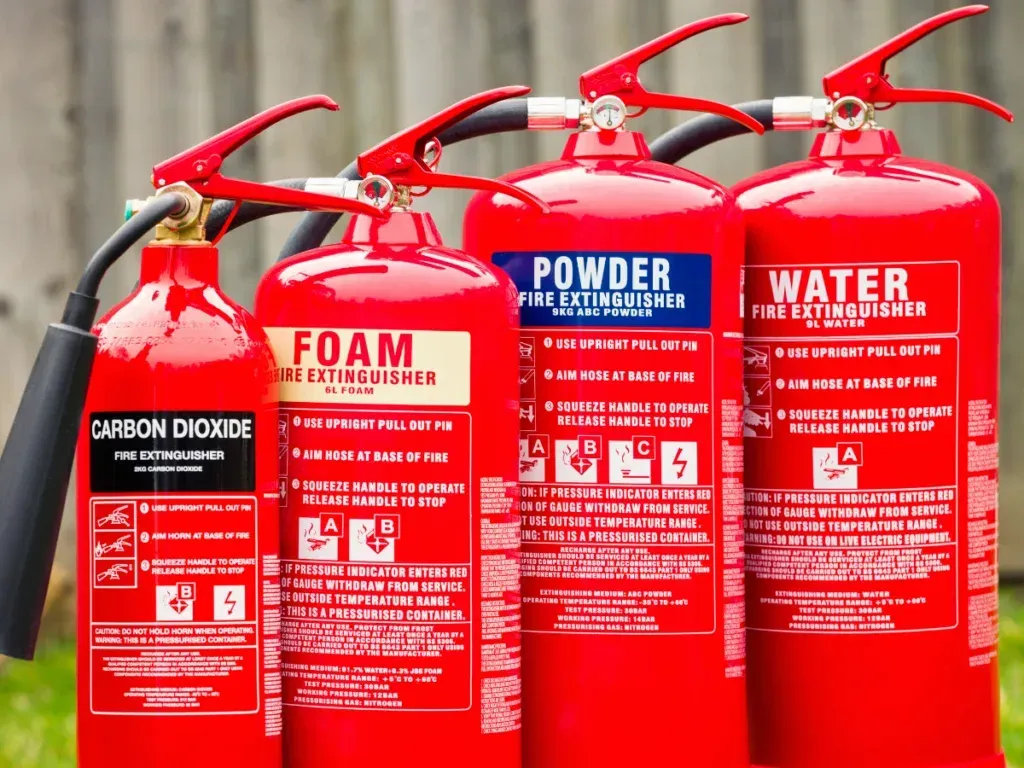
If you’ve ever looked at a row of fire extinguishers and wondered why they all look red with small colour labels, you’re not alone. Fire extinguisher colours aren’t random. They’re part of a clear system designed to help people quickly identify the right extinguisher for the right type of fire.
In this guide, we’ll break down the five fire extinguisher colours, explain what each one is used for, and look at why the colour system changed in the first place.
How Many Fire Extinguisher Colours Are There?
There are five recognised fire extinguisher colours:
Red
Cream
Blue
Black
Yellow
Each colour represents a different type of extinguisher and the types of fire it can safely be used on.
Why Did Fire Extinguisher Colours Change in 1997?
Before 1997, fire extinguishers in Ireland were fully colour-coded. That meant the entire body of the extinguisher showed its type.
For example:
- Foam extinguishers were completely cream
- Powder extinguishers were completely blue
In 1997, the standard changed to meet European Standard BS EN3. From that point on, all modern fire extinguishers have a red (or chrome) body, with the extinguisher type shown using a wide coloured band at the top.
Why red?
The switch to red happened for two main reasons:
- Red is strongly associated with fire and danger, making the purpose of the extinguisher instantly clear.
- Red is highly visible, even in dark or smoke-filled environments, which is critical during an emergency.
What About Chrome Fire Extinguishers?
Chrome extinguishers are the one exception to the red body rule. While they don’t strictly follow the colour guidelines, all chrome extinguishers used in Ireland are ISO 9001 quality supervised and tested to BS EN3 standards.
Because chrome is less visible than red, it’s recommended that larger extinguisher ID signs are used alongside them to ensure they can be easily identified in an emergency.
The Different Classes of Fire
Fire extinguishers aren’t just about colour. Each one is designed to tackle specific classes of fire.
There are six fire classes in total:
Class A – Combustible materials
Fires involving solid materials such as:
Wood
Paper
Fabric
Class B – Flammable liquids
Fires involving liquids like:
Petrol
Paint
White spirits
Class C – Flammable gases
Fires involving gases such as:
Hydrogen
Methane
Class D – Combustible metals
Fires involving metals and chemicals, including:
Magnesium
Potassium
Electrical fires
Fires involving live electrical equipment, such as heaters or appliances.
Once the electrical supply is removed, the fire changes class and may be tackled with a different extinguisher.
Class F – Cooking oils and fats
Typically found in kitchens, for example:
Chip pan fires
Here is a detailed explanation of each extinguisher colour type:
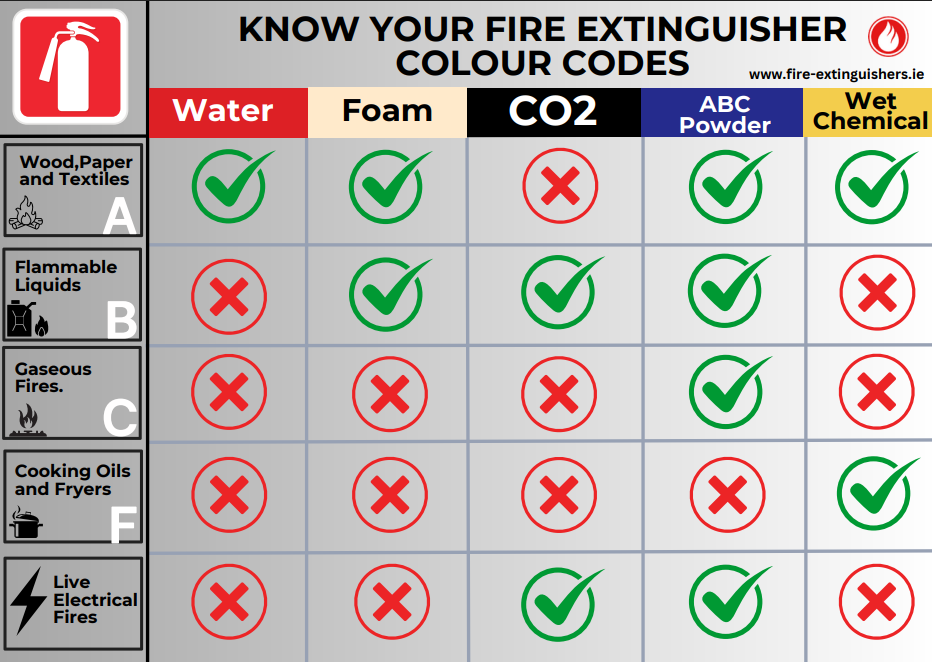
Fire extinguisher colour code identification chart
Fire Extinguisher Colours and What They’re Used For
🔴 Red Label – Water Extinguishers
Best for: Class A fires
Water extinguishers are the most common type you’ll see. They’re ideal for fires involving wood, paper, and textiles and carry the original signal red label.
🟡 Cream Label – Foam Extinguishers
Best for: Class B fires (and also Class A)
Foam extinguishers are water-based, which means they’re effective on flammable liquids as well as solid materials. They’re often the go-to option for offices and commercial spaces.
🔵 Blue Label – Dry Powder Extinguishers
Best for: Class A, B, and C fires
Often called ABC extinguishers, dry powder units are very versatile. However, they shouldn’t be used in enclosed spaces because the powder can be inhaled and the residue is difficult to clean.
Some specialist powder extinguishers are also designed for metal fires and certain electrical risks.
⚫ Black Label – CO₂ (Carbon Dioxide) Extinguishers
Best for: Electrical fires
CO₂ extinguishers are the primary choice for electrical equipment and are commonly found in server rooms and offices. They can also be used on some flammable liquid fires but are not suitable for Class A materials.
🟡 Yellow Label – Wet Chemical Extinguishers
Best for: Class F fires
Wet chemical extinguishers are specifically designed for fires involving cooking oils and fats. While they can be used on Class A fires, most businesses already have water or foam extinguishers for that purpose.
Understanding fire extinguisher colours can make a real difference in an emergency.
The colour-coded labels are designed to help you quickly choose the safest and most effective extinguisher for the fire in front of you.
No matter what type of extinguisher you have, regular fire extinguisher servicing is essential to make sure it works when you need it most.
If you still have questions, feel free to get in touch.